

By Mary Lou Basaraba
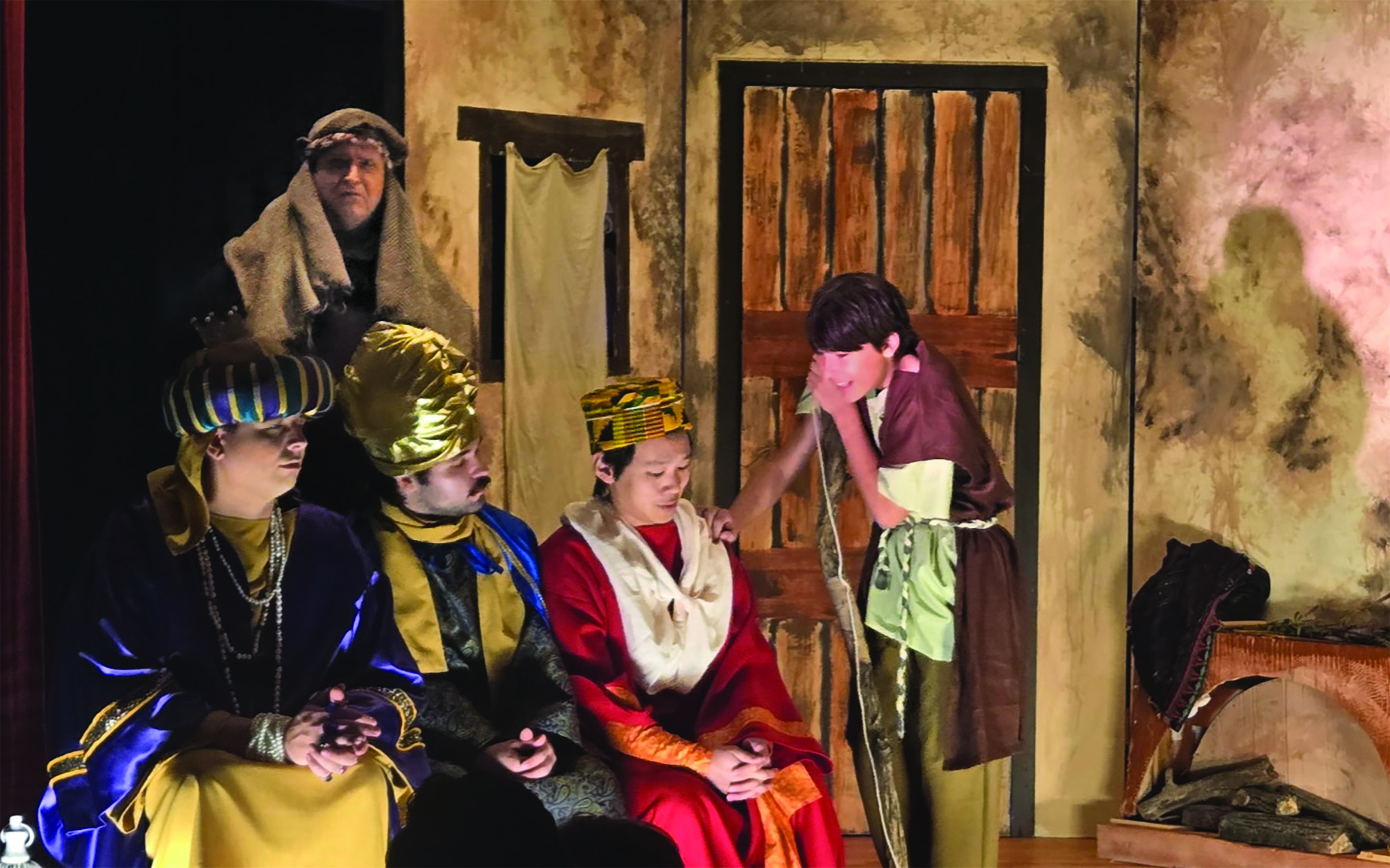
The Grace Church Performing Arts Ministry will partner with the Mission Opera Company to share a beautiful fully staged and costumed production of the beloved seasonal opera, Amahl and the Night Visitors on Sunday, Jan. 4. The performance starts at 4 p.m.
Amahl comes to Grace Church at 4427 Overland Ave, Culver City. There is a ticket price of $35/person, and donations of any size will be gratefully received to share with the Mission Opera and the church.
We presented this opera (written for television broadcast nearly 75 years ago) for six seasons in my early tenure at Grace, but the cost factor and production challenges made it impossible to continue as an annual tradition. In 2019, the Mission Opera based in Santa Clarita brought a touring production featuring young Skylar Lehr Bryant as the Mother at only age 17.
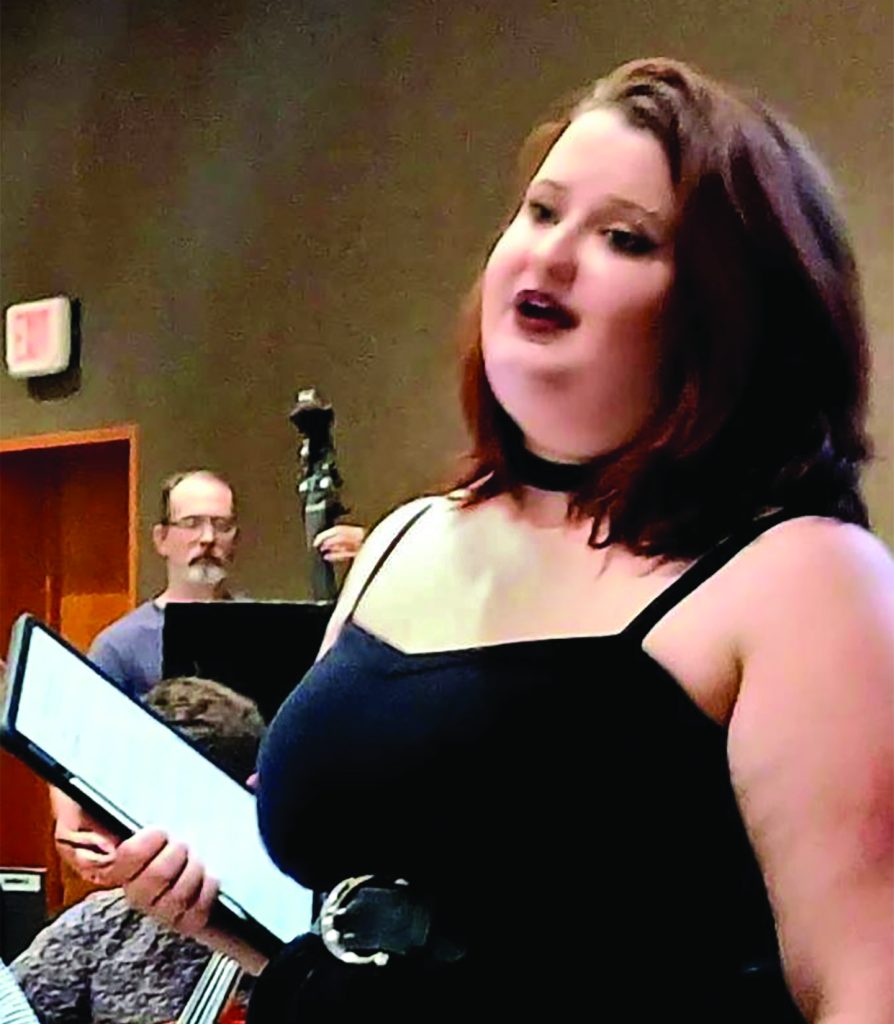
This Sunday, Skylar will return as the Mother. In 2019, she was a student at the prestigious Los Angeles High School for the Arts. She has been a Cantor, service musician and MidDAY At Grace solo artist for the past 10 years and is soon to graduate in Opera from the Oberlin Conservatory in Ohio, one of the top music schools in the world. Bass Baritone and Grace Church Cantor/soloist Chace Yun sings the role of King Melchior and tenor Steve Moritsugu portrays the delightful King Kaspar.
Bring your friends and neighbors for this amazing Epiphany event as the Three Kings encounter the young widow and her crippled son, a beautiful way to celebrate the Reason for the Season.
Amahl is seen in living rooms across the country as the first opera composed for television broadcast. The Three Kings arrive at the home of a poor, young widow and her crippled son, and their encounter reveals their journey to the Child of the Universe.
Grace Church invites you to join the congregation and neighbors for this one-hour performance in English of the story of Amahl and his mother as they meet the three kings following the Star of Bethlehem.
Historically, Grace Church produced its own Amahl for six seasons with a cast of local singers, instrumentalists and congregants to the delight of the local community. Mission Opera, based in Santa Clarita, is sharing its lovely production with a dozen churches across the region and the performance at Grace Church is truly special as Jan. 4, 2026 is actually Epiphany Sunday in the liturgical church year marking the visit of the Wise Men to the infant Jesus.
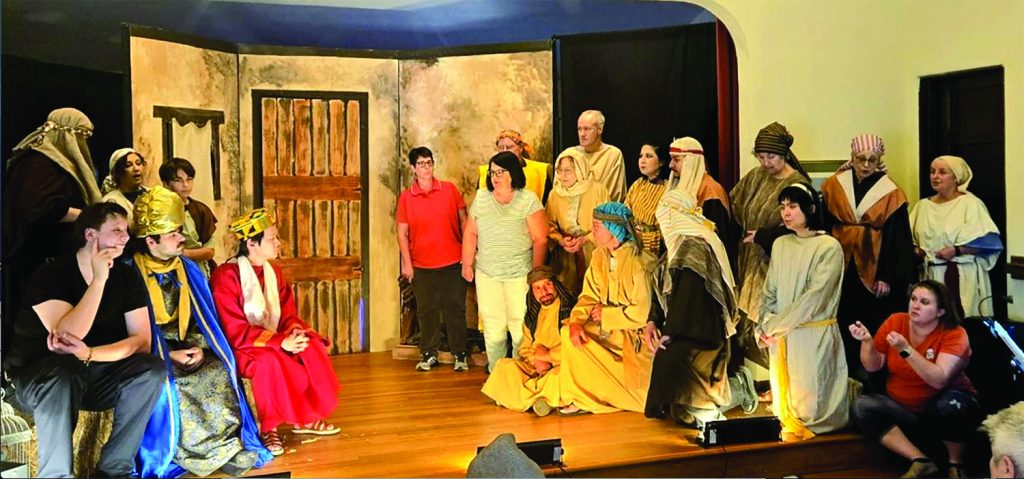
Amahl and the Night Visitors is a one-act opera by the American composer Gian Carlo Menotti, and the first opera composed for television in the U.S. First performed by the NBC Opera Theater on Christmas Eve in 1951, it was broadcast live as the debut production of the Hallmark Hall of Fame at the Rockefeller Center in NYC.
The story takes place in a small hamlet near Bethlehem and focuses on Amahl, a disabled boy who walks with a crutch, has a big imagination and frustrates his mother with his tall tales.
In the opening scene, she is calling him in and does not believe him when he tells her there is an amazing star “as big as a window” over their roof. That night, when there is a knock at the door, Amahl reports that there are three richly dressed kings outside His mother admonishes him for such a ridiculous story, but upon heading to the door she sees the Visitors in their resplendent garb and paraphernalia.
The Kings are on a long journey to bring gifts to a wondrous Child and would like to rest at the house. As the mother goes to fetch firewood, Amahl questions the guests about their lives and and when King Balthazar asks what he does, Amahl responds that he is a shepherd. Then, his mother had to sell his sheep and now they must go begging. King Kaspar is childlike, eccentric, and a bit deaf and in his delightful song, ‘This is my box., he shows Amahl his magic stones, beads, and licorice!
When his mother returns with the wood, she reprimands her son for being a nuisance and he defends himself saying: “They kept asking me questions,” when of course it has been Amahl interrogating the kings. He is sent to fetch the neighbors who bring food and are invited to dance for the Visitors.
Once the neighbors have left and the kings are resting, the mother attempts to steal some of the kings’ gold for her son that was meant for the Christ Child. But she is thwarted by the kings’ page. Amahl awakens to find the page grabbing his mother and goes on the attack. Seeing Amahl’s defense of his mother and understanding the attempted theft, King Melchior says she may keep the gold as the Holy Child will not need earthly power or wealth to build his kingdom
The mother has dreamt all her life for such a king and wishes also to send a gift, but they have nothing to give the Child except Amahl’s crutch. When he offers it to the kings, he suddenly and miraculously can walk, and he leaves with them to see the Child and give his crutch in thanks for being healed.
The booklet with the original cast recording contains the following anecdote:
“This is an opera for children because it tries to recapture my own childhood. You see, when I was a child I lived in Italy, and in Italy we have no Santa Claus. I suppose that Santa Claus is much too busy with American children to be able to handle Italian children as well. Our gifts were brought to us by the Three Kings, instead.
“I actually never met the Three Kings—it didn’t matter how hard my little brother and I tried to keep awake at night to catch a glimpse of the Three Royal Visitors, we would always fall asleep just before they arrived. But I do remember hearing them. I remember the weird cadence of their song in the dark distance; I remember the brittle sound of the camel’s hooves crushing the frozen snow; and I remember the mysterious tinkling of their silver bridles.
“My favorite king was King Melchior, because he was the oldest and had a long white beard. My brother’s favorite was King Kaspar. He insisted that this king was a little crazy and quite deaf. I don’t know why he was so positive about his being deaf. I suspect it was because dear King Kaspar never brought him all the gifts he requested. He was also rather puzzled by the fact that King Kaspar carried the myrrh, which appeared to him as a rather eccentric gift, for he never quite understood what the word meant.
“To these Three Kings I mainly owe the happy Christmas seasons of my childhood and I should have remained very grateful to them. Instead, I came to America and soon forgot all about them, for here at Christmas time one sees so many Santa Clauses scattered all over town.
“Then there is the big Christmas tree in Rockefeller Plaza, the elaborate toy windows on Fifth Avenue, the one-hundred-voice choir in Grand Central Station, the innumerable Christmas carols on radio and television—and all these things made me forget the three dear old Kings of my old childhood.
“But in 1951, I found myself in serious difficulty. I had been commissioned by the National Broadcasting Company to write an opera for television, with Christmas as deadline, and I simply didn’t have one idea in my head. One November afternoon as I was walking rather gloomily through the rooms of the Metropolitan Museum, I chanced to stop in front of the Adoration of the Kings by Hieronymus Bosch, and as I was looking at it, suddenly I heard again, coming from the distant blue hills, the weird song of the Three Kings. I then realized they had come back to me and had brought me a gift.
“I am often asked how I went about writing an opera for television, and what are the specific problems that I had to face in planning a work for such a medium. I must confess that in writing Amahl and the Night Visitors, I hardly thought of television at all. As a matter of fact, all my operas are originally conceived for an ideal stage which has no equivalent in reality, and I believe that such is the case with most dramatic authors.” — Gian-Carlo Menotti