

By Robert Gagnier
Special to the CC News
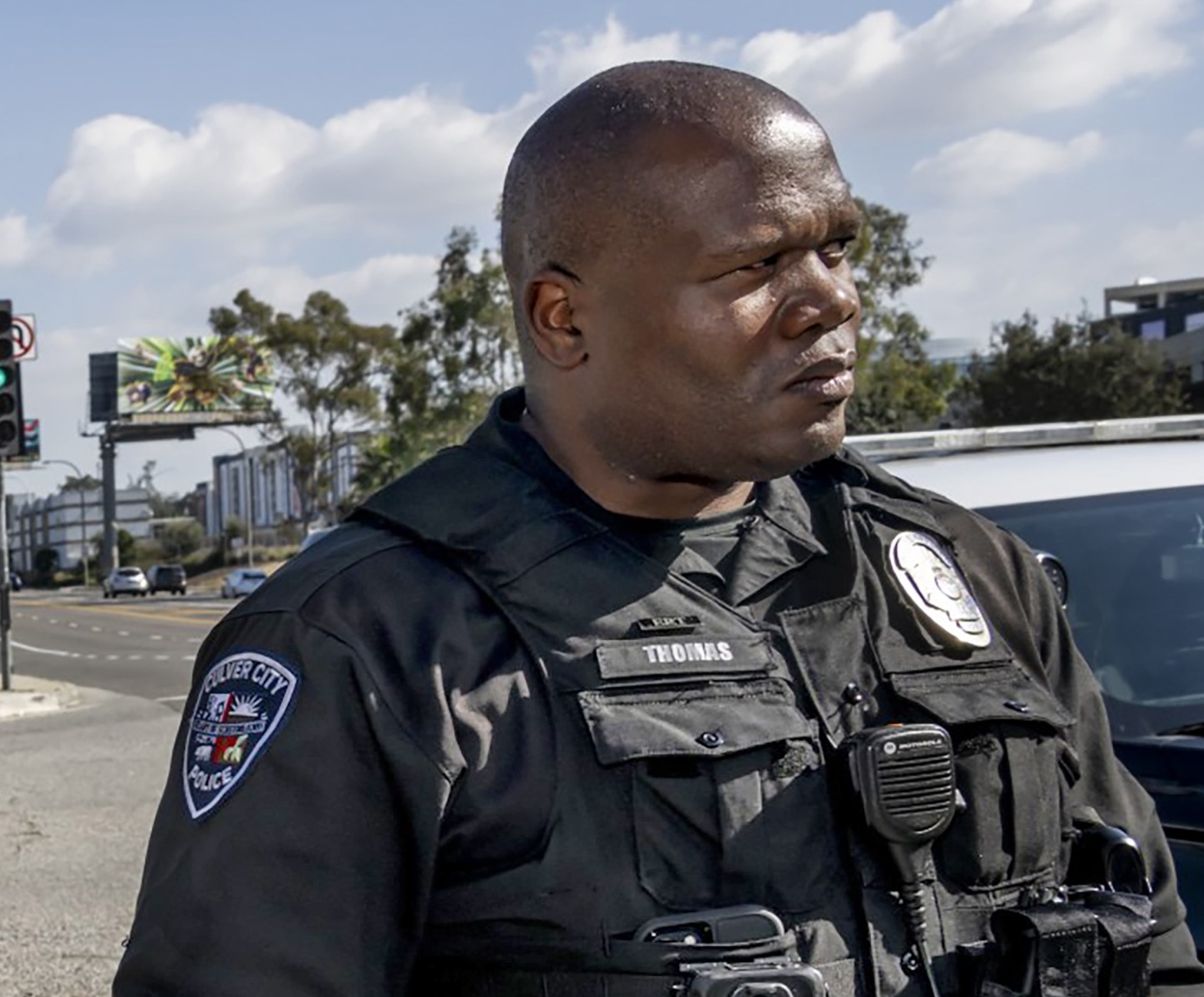
(This is the second of a three-part series with Culver City Police Detective James Thomas. Journalist Robert Gagnier conducted the interview for the News on Sept. 3, 2025 at the CCPD Headquarters, 4040 Duquesne Ave.)
We have heard the phrase “truth is sometimes stranger than fiction.” Can you share an experience where that phrase applied to a time when you responded to an unusual call
DJT (Potential sensitive subject matter below): There have certainly been occasions that I have experienced that point to the fragility of life itself-and how every day is different. So, one incident that stood out; I was responding to a call in Media Park, which is just east of here. An individual was involved in an altercation and sustained a stab wound. Upon arrival, (I was the first on scene) I am trying to get the scene straight and determine who was the victim and who needed any immediate aid. And so, as I approached the victim, I noticed that he had half of his guts and a piece of his liver hanging out on his backside. And so, I immediately went to my car and got my med kit, stabilized him, and called fire and rescue. And it was due to my actions of stabilizing him that he survived, but here was the odd thing: when I was finally able to talk to him, he had a question:
“Have I been stabbed”? Some people may not notice their injuries right away. You cannot make some of these things up.
Does CCPD employ a seniority system with regards to who gets what schedule, off days, and shifts? And if so, what is your absolute favorite shift to work?
DJT: Sure, when it comes to patrol units, there is a seniority system in place. If I were on patrol and not a current detective, I believe I would be #2-now as a detective we do not employ a seniority system. That said, my absolute favorite shift while I was on patrol was Sunday, Monday, Tuesday-graveyards. I worked the graveyard shift for five and a half years. I would always go to graveyards if I had the choice.
I loved graveyards because it was a “pure” shift. You know at that time when a person is doing something he or she shouldn’t be doing. It is “pure” in that sense-whereas during the day, the city is inundated with people and vehicles-things can become somewhat cluttered.
Culver City is widely regarded as one of the safest communities in which to live and work, due in large part to the efforts of the Culver City Police Department (CCPD). Still, crime can and does happen unfortunately. At the outset, were particular neighborhoods notably affected by this issue, and if so, which areas are currently considered hot spots?
DJT: Well, when I first joined CCPD downtown Culver City was certainly not what it is today with the nice shops, restaurants, and other amenities-and I’d like to think that this department played a big role in helping to clean that area up, both here and east of downtown. But the city does not really have hot spots per say. This is a wonderful city-and yet criminals tend to come into Culver City, do their crime-then go back home. And so, you never really know where crime will appear from day to day here. The mall can present an issue since it attracts people who come into that part of Culver City, and for those that commit crime there they are able to hop on the freeway and try to go back home.
The fact of the matter is that we have been and remain a wonderful city and community that people love.
CCPD must have various teams or officers that deal with specific types of crime. Could you provide an example of the procedures involved in surveying a location suspected of being used as a drug house? Finally, what steps should an officer take to inform management of their interest in pursuing a different role within the department rather than continuing in their current position for CCPD.
So we have a surveillance team; and at some point a report will be issued to detectives regarding a particular address. From there, the decision is made as to who to look out for, and what trends to watch. It is a symbiotic relationship: The report starts with either a member of the public or another officer. That report makes it up to a detective who does the write up-and then sends that to the surveillance team.
From this point the intel goes to the surveillance team itself and it goes from there. As far as an officer who wants to move to another role, they must wait two years before they can get a specialized assignment. They need to pass their probation, then get another year in. Within those two years they must display a great work ethic and keep their nose clean. That will open the doors for the young officers. “No work ethic, no specialized assignments.” The thinking is “we don’t want anyone who is lazy doing anything special.” Young officers can express interest in specialized roles during annual reviews with their supervisors.