

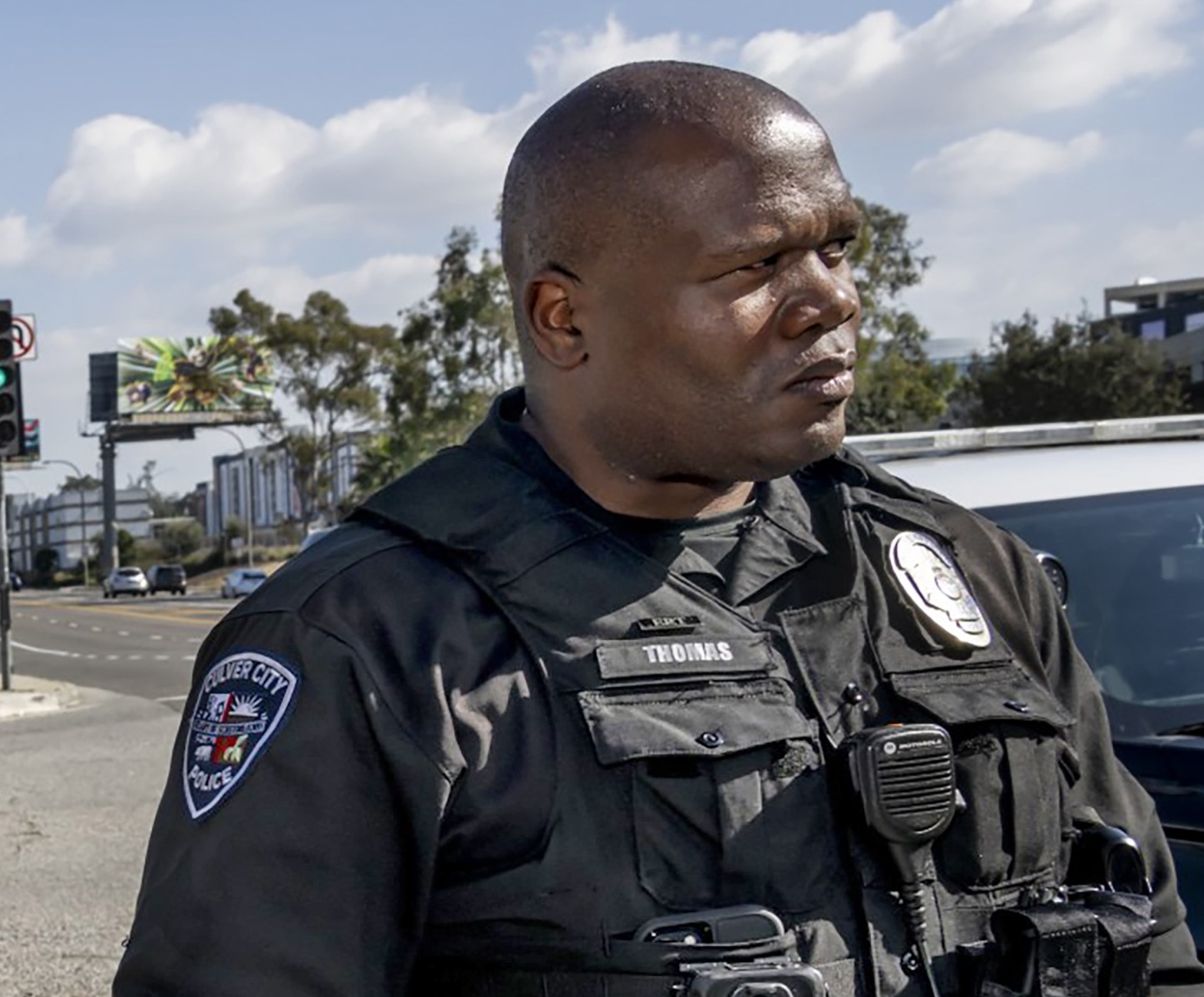
By Robert Gagnier
Special to the CC News
The following is the first of a three-part interview with Detective James Thomas of the Culver City Police Department. Journalist Robert Gagnier conducted the interview for the News on Sept. 3, 2025 at the CCPD Headquarters, 4040 Duquesne Ave.
Who inspired you to take the course that would lead to law enforcement?
Detective James Thomas: Well for me it was not as much a “who” as much as it was a series of life events. I came home from deployment in Iraq and never thought about being a police officer. As a child, I did not envision pursuing this profession through activities such as playing cops and robbers. However, I soon realized I had certain skills- among them talking to people and being a problem solver. And so I began to seek out careers where that skills set could be best utilized. Eventually I would apply for three different enforcement agencies, and it was Culver City PD who won the lottery and landed my services!
How long have you been an officer with CCPD, and what made you want to join CCPD as opposed to another law enforcement agency?
DJT: It will be 18 yrs in two more days (from the time of this interview). As for what swayed my personal choice for CCPD; there was an individual I knew at the time that was already with CCPD. At the time I was working for an employer that produced tactical gear for law enforcement and military employers out in Carson. This gentleman then came into my job looking for equipment for CCPD. At that time, I had already applied with the Sheriff and the Port Police. This contact would go on to tell me how CCPD was a small agency where everyone knew each other and weren’t just numbers. This reminded me of how my team was in the military, so that was attractive to me. There was a parallel between the Port Police due to my love of scuba diving, which I’ve done for over 30 years now. But I went on to think, besides the diving, who would I be working with? So that is what really motivated me to come to CCPD.
Can you name a common misconception that you’ve heard throughout your career that the public at large assumes about the day-to-day life of an officer, but in fact are not true at all?
DJT: Sometimes you will hear people in the public make statements like “police aren’t educated.” “This must be a dead-end job for you guys, what are you guys doing”? Now these comments usually come from people who are in trouble with the law. What they do not know or realize is that this department is highly educated and has officers and others who possess master’s degrees. I hold a B.A. from a military college. This is a job where you must write like a lawyer and be a semi-pro athlete at the same time.
Here we are in September of 2025-in a day and age where technology in general, but Artificial Intelligence specifically is becoming increasingly prevalent in people’s daily and personal lives. Could you discuss that technology, and what aspects of it are now a part of your routine?
DJT: The beauty of this agency is that you get to go to another department and position and then come back if you would like. So, I was a detective back in 2014, and now I am a detective again in 2025.
Technology has expanded in that time frame. At one point in time, we were trying to secure warrants by looking at an individual’s Facebook and Myspace accounts. In 2025 we have license plate reading cameras that help us solve crimes. We have computers in our vehicles that can produce a suspect’s background information very quickly; and our emergency response team (CCPD version of SWAT), can employ a drone(s) and send them into a building before we send an officer there. So, technology can and does play a key role in keeping us safe as well. Previously, I had to go to court to file cases, but now I can process filings and search warrants online, making everything more efficient.