


By Amyn Bhai
Johnathan Franklin was a promising football prospect from Dorsey High School in South Los Angeles with a bright future amid gun violence and limited opportunities. But when that future vanished on one play during his rookie NFL season, he was confronted with a question many athletes eventually must face. Without the game, who am I?
Growing up in a neighborhood shadowed by violence and drugs, Franklin was no stranger to hardship. “One of my good friends was shot and killed in an alley when he was 14,” he recalls. For many youths in his community, the path after high school was often grim: “You graduate, or you possibly graduate and just kind of hang around the neighborhood.” But Franklin wanted more for himself. When he earned a football scholarship to UCLA, he realized just how rare that achievement was. “It was just me and one other kid who had a scholarship, furthering their education. I was like, wow. We’ve got to break the norm here.”
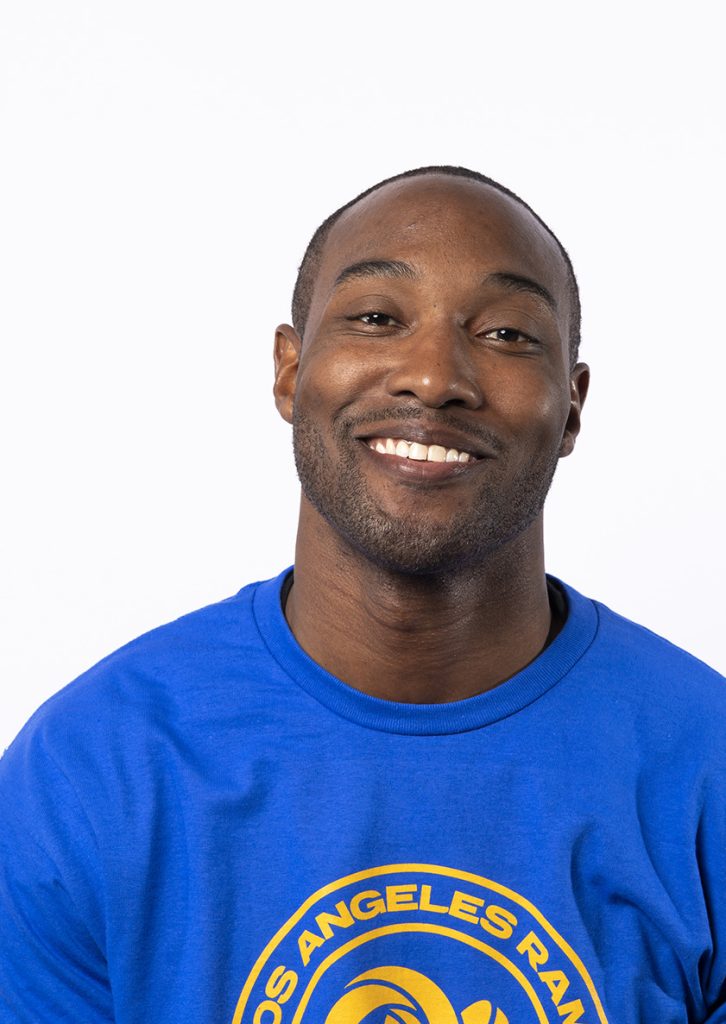
After an outstanding career at UCLA as a running back, Franklin made it to the NFL, the pinnacle for any football player. “Playing football from ages 10 to 23, all you know is the game,” he says. “I was so invested.” Drafted in the fourth round of the 2013 NFL Draft by the Green Bay Packers, he had reached his dream. But just 12 games into his rookie year, on his fourth kick return of the season, everything changed. Fielding the ball at the goal line, he ran 22 yards before a neck injury ended his career. “Everything I got was from football. I wasn’t prepared mentally or emotionally to transition out of it. Everything I did, everything I thought about was football, football, football,” he recalls.
The abrupt end left Franklin in emotional turmoil. “It was hard, depressing — many nights of tears, questioning who I am, what my purpose is now. Am I good enough? Without football, where does confidence come from?” he remembers asking himself. “I really had to find a way to pick up the pieces.”
Navigating that pain meant confronting cultural barriers around vulnerability. “Growing up, you don’t share that you are hurting because the expectation is to always be strong,” Franklin says. “I was this hero to many people. How could I let them know that their hero is broken? Over time,” Franklin recalls, “I had to find a way to let people in, admit I was struggling, that I didn’t have it figured out. There was a lot of pain I was wrestling with.”
His journey to regain his footing in the world was sparked by his faith. “In spite of the worst moments, still remembering God is God,” he says. Mentors, former teammates, and executives helped him find a new purpose. Mark Murphy, then-president of the Green Bay Packers, created an internship for him, Notre Dame’s senior athletic director offered him an opportunity to join their team and Kevin Demoff, the Rams team president, invited him to work with the Rams organization in Los Angeles.
Today, working for the Rams, he is basically Mr. Ram in the community. Whenever there is a community event Franklin is there with a smile and a handshake. At food giveaways, youth football clinics and coaches’ symposiums, Franklin is there. Johnathan Franklin channels his own journey into guiding others through outreach programs, as the Senior Director, Social Justice and Football Development. He shares a simple yet profound truth. “It’s okay to ask for help. It’s okay to not have things figured out all the time.” His story transcends sports, challenging the heavy burden of perfection society often demands for successful former athletes. For him, real strength lies in vulnerability, seeking support, and persevering. By breaking the norm, Franklin is redefining what it means to be strong, both on the field and in life.