

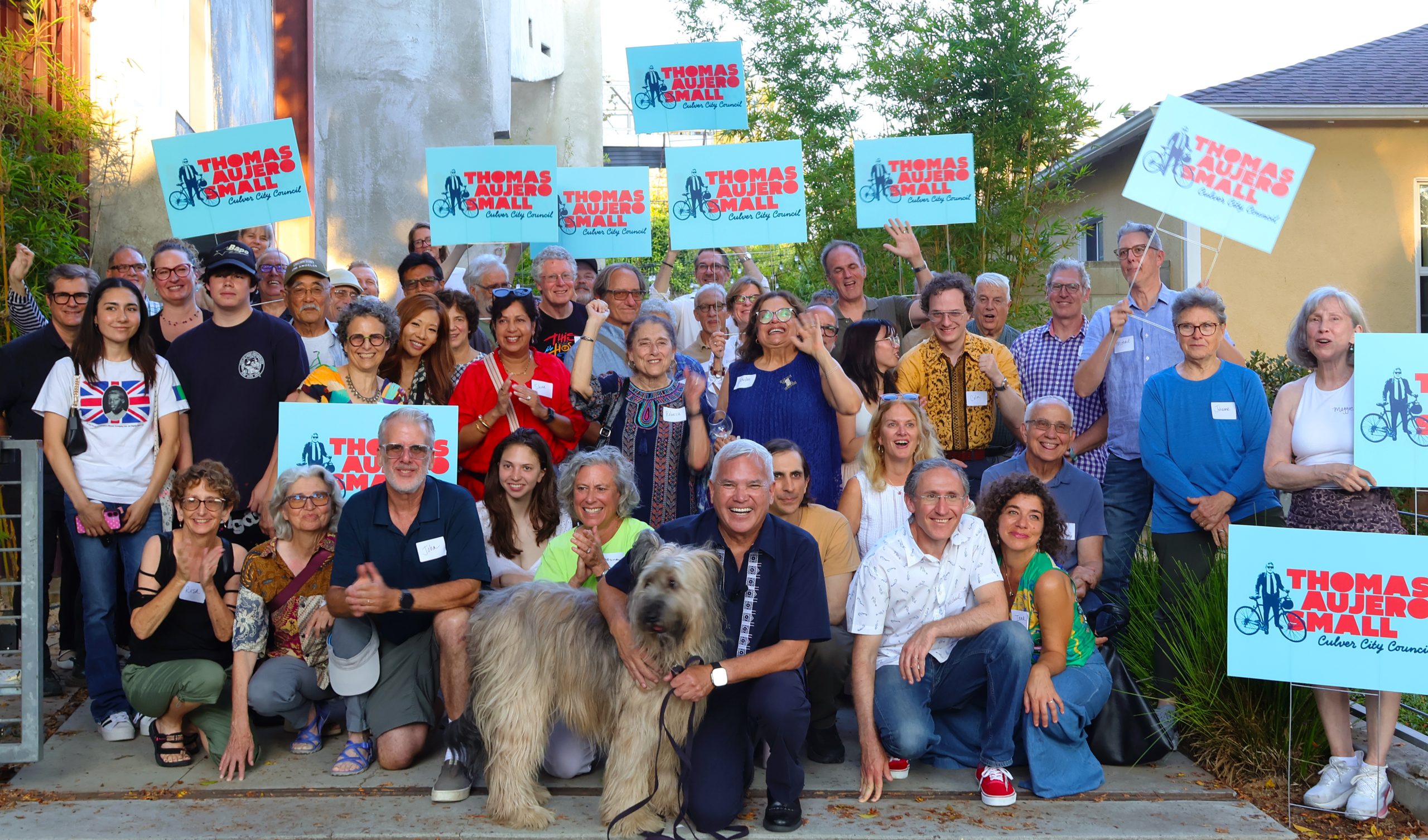
The General Municipal Election will take place on Tuesday, November 3, and with five candidates contesting two available council seats plus three measures on the ballot, there’s plenty to consider. The News is speaking to the candidates, starting with Jeannine Wisnosky Stehlin and Thomas Small.
Thomas Small
Why do you think you’d be a good addition to the city council?
I’ve had the privilege of serving Culver City as both a Councilmember and Mayor, and I know what it takes to turn good ideas into results. My background in architecture and urban planning has also shaped the way I approach local government. I’ve spent much of my career thinking about how cities work, and I’ve had the opportunity to put that experience to use here in Culver City.
During my time on the Council, I helped lead the Transit-Oriented Development Visioning process, which helped lay the groundwork for the city’s subsequent transportation improvements. I also represented Culver City in regional planning through SCAG and have continued that work through the LA Metro Sustainability Council. During my Council service, I also helped guide the city’s General Plan update. Those experiences gave me a much better understanding of how decisions made at City Hall affect everything from the streets we travel to the neighborhoods where we live.
I care deeply about Culver City, and having served on the Council before, I understand both the opportunities and the challenges that come with the job. I know how important it is to listen, work through disagreements, and ultimately make decisions that serve the city as a whole.
Where do you think the current council needs to improve?
I think we need to do a better job of looking beyond the immediate issue in front of us and considering how decisions will affect the city five, ten, or twenty years from now. Culver City has some very important decisions ahead of it, particularly as we accommodate new housing and respond to changes in how people live, work, and travel. I don’t think we can afford to approach those questions one project or one controversy at a time.
Transportation is a good example. I support making it easier and safer to walk, bike, and use public transit, but we also need to pay attention to how changes affect residents, businesses, and the people who depend on our streets every day. When something isn’t working as intended, we should be willing to make adjustments. I don’t think there’s anything wrong with acknowledging that a particular approach needs improvement. What matters is whether we’re getting closer to the outcome we wanted in the first place.
I’d also like to see more consistency in how we engage the community. Residents shouldn’t feel that the important decisions have already been made by the time they’re invited into the conversation. We need to involve people earlier, explain our reasoning, and be willing to learn from what they tell us.
And what has it done well?
I think the city deserves credit for taking some meaningful steps on housing. The updated Housing Element and General Plan have established a framework for accommodating thousands of additional homes. That represents a significant commitment to addressing our housing shortage, and I think it’s important to recognize the work that went into it. Of course, approving that capacity is only the beginning. The next challenge is turning those plans into homes people can actually live in.
I’m also encouraged that Jubilo Village broke ground earlier this year. I supported the project from its inception, and seeing it move into construction is meaningful. It will provide 93 affordable apartments for households that need them, including families who might otherwise have difficulty finding a place in Culver City. That’s the kind of progress I think we should recognize and build on.
I’ve also been pleased to see the city continue investing in arts and culture. During my time on the Cultural Affairs Commission, I worked with Poet Laureate Janet Hoult to help establish the Artist Laureate Program. Seeing that program continue to develop is especially gratifying. The arts have always been an important part of Culver City’s identity, and I think the city deserves credit for recognizing their value.
What would your priority be?
A central priority would be making sure Culver City can actually deliver the housing we’ve planned for, while protecting the people who already live here. We’ve made important decisions about where new housing can go. Now we need to make it easier for good projects to move forward, particularly affordable and workforce housing.
I helped establish the city’s permanent rent stabilization and tenant protection program during my previous Council service, and I remain committed to protecting renters from displacement. But we also need more homes. I don’t see those as competing objectives. A family struggling to afford its rent needs stability today, while someone hoping to move to Culver City needs more housing options tomorrow. Good housing policy has to account for both.
I also want to make sure that new housing contributes to better neighborhoods. I’ve spent much of my professional life studying how the physical environment shapes people’s experiences, and I’ve seen how much difference relatively simple things can make. A tree-lined sidewalk, a safe crossing, or an easy connection to a transit station can change how people experience their neighborhood. As Culver City grows, I want us to pay just as much attention to those everyday details as we do to the buildings themselves.
Culver City is special because…
Culver City has always had this remarkable combination of small-town community and big-city ambition. We’re a relatively small city, but we’ve had an extraordinary influence on film, television, art, architecture, and the broader Los Angeles region.
My wife and I raised our children here, and over the years we’ve built friendships and connections that have made Culver City much more than simply the place where we live. I’ve always appreciated how involved people are in the community. Residents care about their neighborhoods, they have strong opinions about the city’s future, and they’re willing to devote their time to making it better.
I saw that throughout my years in public service, whether I was working with residents on a neighborhood issue or talking with people about the larger changes taking place in the city. We didn’t always agree, of course, but I came away from those conversations with an even greater appreciation for how much people care about this place.
That combination of creativity, community, and civic pride is what makes Culver City special to me. We’ve changed enormously over the years, and we’ll continue to change, but I believe we can embrace new opportunities while holding on to the qualities that make people proud to call Culver City home.