

By Quinlan Taylor, Age 15
KidScoop Media Correspondent
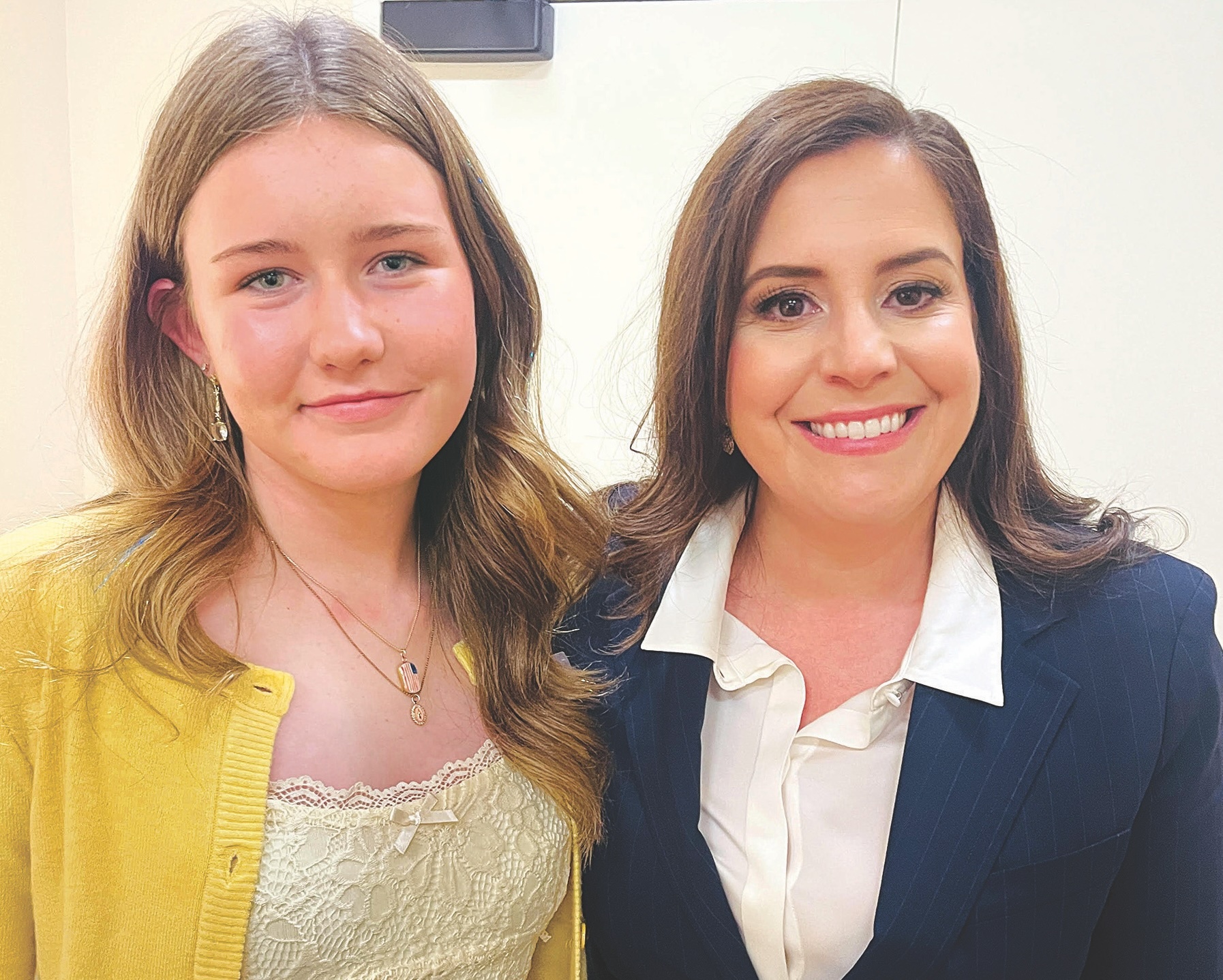
US Representative Elise Stefanik commemorated the release of her new book, Poisoned Ivies: The Inside Account of the Academic and Moral Rot at America’s Elite Universities, with a conversation and book signing at the Ronald Reagan Presidential Library in Simi Valley. I had the opportunity to sit down with her and discuss the story behind it.
Poisoned Ivies stems from the December 2023 congressional hearing where Stefanik questioned the presidents of Harvard, MIT, and UPenn on whether calling for the genocide of Jews violated their campus conduct rules. Their evasive answers led to multiple presidential resignations and a national conversation about elite academia. The book argues the rot is systemic, with institutionalized antisemitism and ideological conformity entrenched across these institutions. It closes with a blueprint for reform, including dismantling DEI and overhauling the faculty system.
Her alma mater being Harvard, I was interested to ask how her time on an Ivy League campus shaped what she came to see as “academic and moral rot,” and whether there was a specific moment when her view of her alma mater shifted. She responded by saying, “It wasn’t necessarily when I was an undergraduate, but because I had the experience as an alumna and also as a Member of Congress, I was distraught with the targeting of Jewish students, the failure of the school to enforce its rules, and the lack of focus on academic excellence.”
As a high schooler, I wanted to ask where she would apply knowing what she knows now. She highlighted the University of Florida, Dartmouth, and the Hoover Institution at Stanford as schools that, “are getting it right,that are focusing on academic excellence, academic rigor, and connecting them to professional opportunities after graduating.”
Reading her book, I was astounded by the corruption of these institutions, which led me to ask: “You describe the campus culture as a mix of censorship, leftist groupthink, antisemitism, and moral cowardice. Of those four, which do you think is most fixable, and which is hardest to uproot?” She offered multiple policy suggestions, such as addressing the “foreign country funding going into these schools” and the “overall U.S. taxpayer-funded piece,” strengthening protections for American Jewish students, and building on the executive orders the Trump administration has already put in place. She also pointed to a longer-term, underlying issue: “the ideological balance of the faculty,” which, she noted, is harder to legislate.
Going off that question, I asked if the same corruption had taken hold in European colleges, to which she replied that “there’s a significant crisis of antisemitism in those institutions.”
As a student concerned about the dishonesty of these institutions, my final question was what students like me should do. She encouraged us to speak out and use our voices.
To end the interview on a lighter note, I asked where she would work if not in politics and what subject she would add to every school curriculum. She said that as a child she wanted to be a Disney animation artist, and that if she could add one subject to any school’s curriculum, it would be civics education.
Representative Stefanik was an incredible speaker. Sitting across from her, what struck me most was her clarity. She isn’t arguing that these institutions are beyond saving, but that saving them requires honesty about what went wrong. For students still deciding where to invest four years and a significant amount of money, honesty matters. The rot she describes didn’t happen overnight, and it won’t be fixed overnight either. But conversations like this one are a start.
After the interview concluded, Ms. Stefanik continued speaking with attendees during the public event and book signing.